Control Mapping Across Multiple Frameworks: A Practical Guide to Reuse

If you're collecting the same evidence three times for three frameworks, you're doing it wrong.
That quarterly access review your team just ran? It satisfies SOC 2 CC6.1, ISO 27001 A.9.2.5, HIPAA § 164.312(a)(1), and PCI DSS Requirement 7. Four frameworks, one artifact. But if nobody's mapped that relationship, someone on your team is pulling the same report four times, labeling it four different ways, and uploading it to four different folders.
Control mapping fixes that. Here's how it works in practice.
🗺️ What Is Control Mapping?
Control mapping is the process of linking one security control to every framework requirement it satisfies.
A control is a thing you actually do — "We perform quarterly access reviews for all production systems." Framework requirements are the reasons you do it:
- SOC 2 CC6.1: Logical and physical access controls are implemented to protect information assets
- ISO 27001 A.9.2.5: Asset owners shall review users' access rights at regular intervals
- HIPAA § 164.312(a)(1): Implement technical policies to allow access only to authorized persons
- PCI DSS Req 7.2.1: Access to system components and cardholder data is limited to authorized individuals
Four different ways of saying the same thing. One control satisfies all of them. That's control mapping — the explicit documentation of those relationships so your team never does the same work twice.
🕸️ The Control Graph Concept
Most teams think about compliance as separate checklists. SOC 2 is one list. ISO 27001 is another. HIPAA is a third. Each gets its own spreadsheet tab, its own owner, its own evidence folder. That mental model is the root cause of duplicate work.
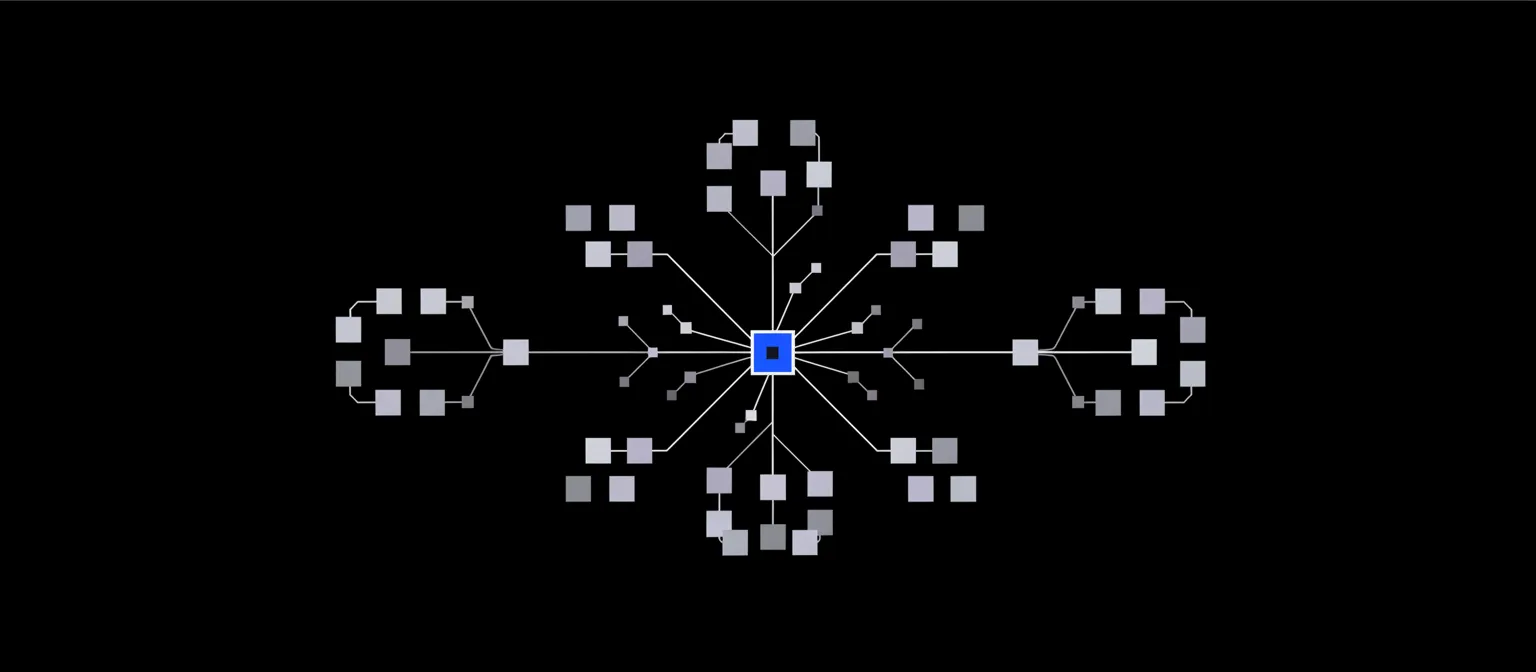
A better model is a control graph. Picture your controls as nodes in a network. Each framework requirement is an edge connecting to those nodes. A single control node — "quarterly access review" — might have four edges connecting it to four different framework requirements.
When you add a new framework, you're not starting from scratch. You're adding new edges to existing nodes. The graph makes it immediately obvious which requirements connect to controls you already have and which need new controls.
This starts with what you do, not what's required. Your controls are the foundation. Frameworks are layers on top. (This is exactly the model episki uses — a control graph that shows you overlap instantly when you add a new framework.) When you add HIPAA to an existing SOC 2 + ISO program, you can see that 60-70% of HIPAA's requirements connect to controls you've already implemented. You only need net-new controls for the HIPAA-specific gaps.
🔒 SOC 2 + ISO 27001: The Starting Overlap
If you're managing SOC 2 and ISO 27001 together, you're looking at roughly 40-60% overlap in control requirements. (For a full breakdown of how these frameworks compare, see our compliance framework comparison.) That's a massive reuse opportunity. Let's look at the three biggest areas.
Access Control (CC6.1 ↔ A.9)
SOC 2's CC6.1 requires logical and physical access controls. ISO 27001's A.9 covers user access management, provisioning, and periodic review. The overlap is almost total — both want RBAC, least privilege, periodic reviews, and timely de-provisioning.
Evidence that satisfies both: A quarterly access review export from your identity provider showing who has access to what, when it was last reviewed, and any changes made.
Incident Response (CC7.3 ↔ A.16)
Both require a documented incident response plan, defined roles, incident classification, and post-incident analysis.
Evidence that satisfies both: Your incident response policy plus a log of incidents handled during the audit period, including classification, response timeline, and root cause analysis.
Change Management (CC8.1 ↔ A.12.1.2)
Both expect documented change procedures, approval workflows, pre-deployment testing, and rollback capabilities.
Evidence that satisfies both: CI/CD pipeline logs showing pull request reviews, approval gates, automated testing, and deployment records. If you're using GitHub or GitLab with branch protection rules, you're generating this evidence automatically.
🏥 Adding HIPAA to the Map
Once you've got SOC 2 and ISO 27001 mapped, adding HIPAA is less work than most teams expect.
What's Already Covered
HIPAA's technical safeguards overlap heavily with what SOC 2 and ISO already require:
- Access controls (§ 164.312(a)) → Already covered by your SOC 2 CC6.1 / ISO A.9 controls
- Audit controls (§ 164.312(b)) → Already covered by your logging and monitoring controls
- Integrity controls (§ 164.312(c)) → Already covered by your data protection and change management controls
- Transmission security (§ 164.312(e)) → Already covered by your encryption controls
If you're SOC 2 + ISO compliant, you've likely already satisfied 60-70% of HIPAA's technical safeguards without writing a single new control.
What's Unique to HIPAA
The gaps are HIPAA-specific and can't be covered by general security controls:
- Business Associate Agreements (BAAs): A signed BAA with every vendor that handles PHI. SOC 2 and ISO don't address this directly.
- Breach notification: Notify affected individuals within 60 days, notify HHS, and for breaches affecting 500+ people, notify the media. Other frameworks have incident response, but not these specific timelines.
- PHI-specific handling: Minimum necessary standard, patient rights (access, amendment, accounting of disclosures), and specific retention/disposal rules for health information.
- Privacy Rule compliance: Rules about PHI use and disclosure that go well beyond general data protection.
These are your net-new controls. Everything else maps back to work you've already done.
💳 Adding PCI DSS to the Map
PCI DSS is the most prescriptive of the four frameworks, which means it has the most specific requirements — and the most areas where general controls aren't enough.
Where PCI Shares Ground
- Access control (Req 7, 8): Authentication, RBAC, MFA — covered by existing controls, though PCI may require stricter implementation within the cardholder data environment (CDE)
- Network security (Req 1): Firewall and segmentation overlap with ISO A.13 and SOC 2 network controls
- Vulnerability management (Req 5, 6): Patching and scanning overlap with ISO A.12.6 and SOC 2 CC7.1
- Monitoring and logging (Req 10): Audit trail requirements overlap with ISO A.12.4 and SOC 2 CC7.2
CDE-Specific Controls That Don't Overlap
- Cardholder data storage rules (Req 3): What card data you can store, encryption requirements, and retention limits. No SOC 2 or ISO equivalent.
- Payment page security (Req 6.4.3, 11.6.1): Client-side skimming protection (Magecart-style). PCI 4.0-specific with no parallel elsewhere.
- Network segmentation testing (Req 11.4.5): Pen testing focused specifically on CDE segmentation controls.
- PAN display restrictions (Req 3.4): Masking the primary account number, showing at most the first six and last four digits.
PCI adds the most net-new work of any framework you'll layer on. But even with PCI, 30-40% of your existing controls carry over.
📚 Building a Unified Control Library
Instead of maintaining separate control lists per framework, build one unified library. Here's the approach.
Start With Controls, Not Frameworks
Organize controls by domain, not by framework:
- Access management: Access reviews, provisioning, MFA, SSO
- Data protection: Encryption, classification, retention, disposal
- Incident response: Detection, triage, containment, recovery, notification
- Change management: Approval workflows, testing, deployment, rollback
- Vendor management: Assessment, contractual requirements, ongoing monitoring
Tag Each Control With Frameworks
For every control, document which requirements it satisfies:
- Quarterly access review → SOC 2 CC6.1, ISO A.9.2.5, HIPAA § 164.312(a)(1), PCI Req 7.2.1
- Incident response plan → SOC 2 CC7.3, ISO A.16.1.1, HIPAA § 164.308(a)(6), PCI Req 12.10.1
- Annual penetration test → SOC 2 CC4.1, ISO A.18.2.1, PCI Req 11.4
One Owner, One Evidence Artifact, One Cadence
Each control has one person responsible, one artifact that proves it happened, and one schedule. No ambiguity. No shared ownership. No "I thought you were handling that." (For more on structuring evidence artifacts, see our guide to building an evidence library that scales.)
episki's control library is built around exactly this model — map a control once, tag it with every framework it satisfies, assign ownership, and let the platform track evidence freshness automatically across all your programs.
📋 Practical Example: Access Review Mapped Across 4 Frameworks
Here's how a single quarterly access review satisfies requirements across all four frameworks:
Control: Quarterly user access review for production systems | Owner: IT Security Manager | Cadence: Quarterly | Evidence: Okta export showing users, roles, last login, and review decisions
| Framework | Requirement | What the Evidence Proves |
|---|---|---|
| SOC 2 | CC6.1, CC6.2 | Access is restricted and reviewed; revoked when no longer appropriate |
| ISO 27001 | A.9.2.5 | Access rights are reviewed at regular intervals |
| HIPAA | § 164.312(a)(1) | Technical policies limit ePHI access to authorized persons |
| PCI DSS | Req 7.2.1 | Access is limited to those who need it for business purposes |
One review. One export. One owner. Four frameworks satisfied. This pattern works the same way for incident response, vulnerability scanning, encryption, training, and dozens of other controls.
⚠️ Common Mapping Mistakes
Control mapping sounds straightforward. But there are traps.
Assuming Controls Are Equivalent When They're Only Similar
SOC 2 CC6.1 and PCI DSS Req 7 both deal with access control. But PCI has CDE-specific requirements that go beyond general access management. Map at the control level, not the framework level. Verify that each mapped control satisfies the specific language of each requirement.
Not Verifying Evidence Format Requirements
A CSV access review export might satisfy SOC 2 fine. But your ISO auditor might want different metadata. HIPAA might require evidence that the review specifically covered ePHI systems. Same control, but the evidence packaging might need to vary per framework.
Mapping at Too High a Level
"We do access control" mapped to four frameworks isn't control mapping. It's a wish:
- "Access control" → SOC 2, ISO, HIPAA, PCI ← too vague
- "Quarterly production system access review with Okta export" → SOC 2 CC6.1, ISO A.9.2.5, HIPAA § 164.312(a)(1), PCI Req 7.2.1 ← this is real mapping
The more specific your mapping, the more confident you and your auditor will be. When it comes time for the actual audit, that specificity pays off — read about preparing for your compliance audit to see how good mapping translates to a smoother assessment.
🎯 Key Takeaways
- Control mapping links one control to every framework requirement it satisfies — eliminating duplicate evidence collection
- Think in graphs, not spreadsheets — controls are nodes, frameworks are edges
- SOC 2 + ISO 27001 share 40-60% overlap in access control, incident response, and change management
- HIPAA layers cleanly onto SOC 2 + ISO with 60-70% reuse — gaps are PHI-specific
- PCI DSS adds the most net-new work due to CDE-specific requirements, but still shares 30-40%
- Build your library around controls, not frameworks
- One owner, one artifact, one cadence per control — simplicity prevents gaps
- Map at the specific control level — precision prevents false confidence
Control mapping is the single biggest efficiency lever for teams managing multiple compliance programs. The first framework is the hard one. Every framework after that should be an exercise in reuse, not rebuilding.
If you're tired of collecting the same evidence multiple times for multiple frameworks, episki gives you a unified control library with built-in framework mapping, evidence tracking, and ownership management. Map once, satisfy many. Start your free trial and see how much duplicate work disappears.

About the author
Justin Leapline
He founded episki after two decades running security and compliance programs at BNY Mellon, GiftCards.com, and Diebold, and leading the GRC practice at TrustedSec. These days he advises teams as a fractional CISO, teaches as IANS Research faculty, sits on the board of the CSA Pittsburgh chapter, and co-hosts the Distilled Security Podcast — and writes here from the practitioner's side of the audit table.
Put your compliance program on autopilot
Compliance Playbook for Regulated Industries: Healthcare, Fintech, and SaaS
Industry-specific compliance requirements, common pitfalls, and practical starting points for healthcare, fintech, and SaaS companies.
Dealing with Bad Auditors: How to Protect Your Program When the Process Breaks Down
A bad auditor wastes time, muddies findings, and can put your program at risk. Here's a practical playbook for spotting the problem early, pushing back without burning bridges, and getting the engagement back on track.
